Showing posts with label documentary. Show all posts

Bully

Bully
seen @ Kew Gardens Cinemas, Kew Gardens, Queens, NY
4.24.12


For what it's worth, I saw the PG-13 version of Bully and I'm convinced that the big rating hoo-hah that preceded this film's release was a whole lotta nothing in the end. Say what you will about the film's uber-producer Harvey Weinstein, but at the very least, I can see why he chose to champion this film. It's moving and powerful, and the bullied children, along with their families and friends, eloquently lay bare the narratives of their lives. It's tough to sit through at times, but it's worth the effort.


That said, I don't think Bully was as comprehensive a film as it could have been. Why? No one talked to any actual bullies! As harrowing and at times even inspiring, the stories of the bullied children are, after awhile one gets the feeling of preaching to the choir. We all agree that bullying children is wrong and that something should be done about it, but in order to do that, I feel it's necessary to first ask: why does it happen?


Bullying is not an inherent act; it must be learned. It's an act that transcends gender, race, environment and generation. Without getting too deep into psychology and sociology, I think it's safe to say that it's learned from being around other peers, and is the result of a variety of societal pressures and fears. But talking to actual bullies and finding out straight from them why they harass other kids would've been as enlightening as hearing from the bullied - not to lay blame, not to antagonize, but simply to understand. The more I watched Bully, the more I felt that it was a little bit one-sided.


Still, when you see these stories unfold, you can hardly blame director Lee Hirsch for wanting to give as much time to them as possible. A few highlights: the town meeting held by the parents of the teenager who killed himself, in which an entire community bares its pain over the effects of bullying; the mother of the girl who faced her tormentors with a stolen gun, hugging and singing to her daughter; the father of the small-town lesbian teen, saying how he never truly understood what it meant to walk in another's shoes until he raised a gay child in an intolerant town. These are only a few of the images that linger long after seeing this film.


From a different angle, I was quite curious as to how they filmed the scenes on the school bus with Alex, the Iowa tween who is shockingly blase about the amount of bullying he gets. It looked like there was an actual cameraman on the bus and not a hidden camera, so if that was the case, how did they get the kids to act normally and not mug for the camera?


Reality television has challenged our perception of filmed, intimate (read: unscripted) moments, and while this is certainly not unique to Bully, there were a few scenes where I couldn't help but wonder at the level of veracity. I'm talking about any scene meant to be spontaneous, but filmed from more than one angle, such as the bus scenes. Seeing cuts in such scenes make me think there's a "jump" in time implied. While it's possible that there was more than one camera on that bus, how likely is it - especially when one is specifically after naturalism uninhibited by the presence of cameras? Like I said, this is not something unique to this film, but I couldn't help but think about it as I watched.


Regrettably, I had to take action against a chronic cell phone user while watching Bully. I was in Theater 6 of the Kew Gardens, a small screening room, half of which has stadium seating. I was in the front left side of the first row of stadium-seating, and in a corner in the far rear, right side, was a middle-aged (I think) couple. There were perhaps a half-dozen other people in the room when the film started.


The woman's cell went off early. I didn't see her at first because she and her companion were so far back, but after the second time it went off, I spotted her. The movie was just loud enough at first that I could pay her yapping on the phone no mind, but I was getting irritated. The third time her cell went off, however, during a quieter moment, I got out of my seat, walked halfway up the stairs, pointed straight at her and demanded she get off the phone. (I even remembered to say please.) Surprisingly, she didn't put up a fight - and I was ready for one. I didn't hear her cell for the remainder of the flick.

Marley (advance screening)

Bob Marley, poet and a prophet
Back during my days as a summer camp counselor in Massachusetts, there was this guy named Nick. He was one of the counselors, and he was a good guy; very laid-back. Nick played guitar, and his bag was world music. I remember him teaching me about some Brazilian music that I really dug. Nick played guitar, and all summer long he tried to get the kids into reggae music. There were two songs in particular he loved playing most. "Pressure Drop" by Toots and the Maytals was one; the other was "Redemption Song" by Bob Marley.


He had mixed success. Nick was popular and well-liked by both campers and staff, so it wasn't anything to do with his personality. He was a decent singer, so it wasn't that. I suppose some songs connect with kids more than others.


Every now and then I think of Nick whenever I hear reggae music, and in my neighborhood, I hear it almost as often as I do hip-hop. To be honest, reggae has always been difficult for me to get into. A lot of the time, I can barely understand what the singers are saying, partially because of the thick Jamaican accents, partly because of the cadence of their singing. "Pop" reggae stars like Shaggy and Sean Paul are different, naturally, though I imagine most reggae fans would probably turn their noses up at those guys. And then there's someone like Matisyahu, who is perhaps in a league of his own.


Bob Marley taught me how to off it
Still, when you talk about reggae music, sooner or later you have to come to Bob Marley, because in practical terms he was the Elvis of reggae. No one in the field has the following he does, even long after his death, because over the course of his brief life he grew to become much more than a singer. Like John Lennon, he was an icon for peace.


The forthcoming documentary Marley captures his life and music beautifully, including interviews with members of his band, The Wailers, plus family, friends, and business associates, and of course, lots of news and concert footage.


The film goes into the singer's conversion to the Rastafarian religion, but it doesn't go that deep into the faith's basic tenets. We do see quite a bit of discussion on the Ethiopian emperor Haile Selassie, who's revered as some sort of reincarnation or direct descendant of Christ or something, like Linda Fiorentino's character in Dogma, but we don't really find out how he got that way. Rastafarianism is such an integral part of Marley's music; it would've been nice to have gone a little more into it, I thought.


And then there's the political aspects of Marley's life. We see the opposing political parties in Jamaica during Marley's time, his involvement, the attempt on his life during a concert in Jamaica, as well as the subsequent concert, years later, that the country practically begged him to do in order to restore peace between the factions.


Seeing all of this reminded me of the activism in pop music that I grew up witnessing in the 80s. Whether it was to fight drugs, or South African apartheid, or hunger in Ethiopia, I don't recall ever questioning its place, even if I didn't always understand what the cause was about. Take apartheid, for example. I vaguely remember learning a little about it in school, but I probably learned more about it from singers like Peter Gabriel than anything else. It's an aspect of 80s music that's rarely discussed. People sometimes mock 80s music, but for all its synthesized sound and big hair and heavy makeup, it was also a period of great activism, and that activism was front and center in the mainstream.


Bob Marley, walk it like he talk it
Marley, though... imagine an entire country looking to a singer to quell civil unrest and inspire hope and freedom amongst the populace. And not just in Jamaica, either; the doc also shows him in a concert in Zimbabwe on the eve of that nation's independence. (Of course, no one knew at the time what their leader, Robert Mugabe, would turn out to be like, but hey.)

Perhaps the only contemporary musician comparable to Marley in terms of combining popularity and politics might be Bono, but even he doesn't come close to the reverence many people felt, and still feel, for Marley. There was no one quite like him.


Marley the doc was screened last Thursday at a club called the Knitting Factory in Brooklyn. This was my first time there. The bar/lounge area is surrounded with paintings of musical stars, like Debbie Harry, Iggy Pop, and Johnny Cash. In one corner there was a video game console where people were playing Tetris. I played it for a bit before we were all let into what would normally be the concert hall for bands. There were folding chairs all around in front of the screen on the stage. I sat up in the front row for a change.


The audience was a diverse one, and it soon became clear to me that some people knew Marley's history better than others. A woman in the row behind me periodically responded to salient points on Marley's history with knowing "um hmms" in recognition. She talked to her friends quite a bit, but it never quite reached the point where I felt I had to shush her.


Marley will be released April 20 (Four-Twenty, of course).

Freeze Frame: The WSW Roundtable take 6


And we're back once again for another go-round on the world of film. This is third and final session with the current group of fellow film bloggers:

Rachel and Jess from their brand-new blog, Reel Insight 

A new group will come on board beginning in June. 

And here are this month's questions:

1. The phenomenal success of The Hunger Games has been marred by a vocal minority of fans who were disappointed that certain characters from the book were cast with black actors. How can a situation like this be avoided in the future?

Tom: At the risk of sounding flippant, I really don’t care. The reaction of the books readers was completely absurd – not to mention racist – and I see no reason for filmmakers to try and appease them. From what I understand (I haven’t read the books), the characters in the novels were described as having darker skin, which makes the outcry even more ridiculous. But even Suzanne Collins had explicitly written the characters as Caucasian, I don’t really see a problem with making changes for the film (directors make alternations all the time!) The most important thing is to cast good actors, which is what happened. 

Rachel: Unfortunately it's a double edged sword. There is no way to fix ignorance like this; these racist morons have been raised to believe someone of a different race is inferior to them and shouldn't play a pivotal role in a film, despite being described as such in the source material, which they supposedly read. 

On the one hand, I want to say that we shouldn't give these people any attention at all and ignore their hateful comments; on the other hand, I say splash their stupidity all over the internet so they can be mercilessly mocked and made an example of. Either way, it's really a lose-lose situation, which is sad since The Hunger Games was so wonderfully cast, even if a few people refuse to see it that way.


Courtney: The fact of the matter is, society still has a long way to go in terms of racial tolerance. The sad part is [that] the characters in question are not even white in the book! It reminds me of when Will Smith was cast in Enemy of the State and the media made such a production of the fact that the film had originally been written for Tom Cruise. I think people’s mindset needs to change. There is no rule stating that any character in film needs to be of a specific colour for the film to be successful. In theatre characters are being re-imagined all the time. 

Jess: I don't think this is something that can or needs to be avoided. When a book is made into a movie, particularly these days with careful reading, readers of the book expect the characters to appear as they do in the book. As Rue and Thresh were both described with dark skin and dark hair, and presumably come from the South, it only makes sense that they were cast with black actors. I know people throw a hissy fit when the hair color of character is changed because the actor or actress doesn't possess that color. The inherent racism in changing a character from a black man or woman to a white actor or actress because it will appeal to more people is something worth fighting against. The people who objected should be made aware of their inherent racist attitudes.  

2. After the documentary Bully received an R rating from the MPAA, distributor The Weinstein Company released it unrated, but then the MPAA reversed its decision after minor changes were made and the film's rating was changed to PG-13. What would it take for a re-evaluation of the way ratings are handed out in America? Would federal intervention be necessary?

Tom: As a non-American, I’m alternately amused, appalled and baffled by the behavior of the MPAA. They’ve repeatedly demonstrated views and practices that are both archaic and ludicrously inconsistent, and I think the entire organization needs to be overhauled. Whether that happens any time soon is another matter entirely. On a side-note, the Australian classification system is partially government run, and while it’s demonstrated itself to be at times just as out-dated and ultra-conservative as its American alternative, on the whole it probably works slightly better.


Rachel: It seems the MPAA have a very black and white take on what deserves an R versus a PG-13. They hear certain words a number of times, see certain body parts or a quota of gore, and their decision is made. They do not always seem to take into consideration the overall theme/tone of a film, what's being implied or even who should be watching the film.

The bigger slap in the face for Bully was that its rating came at the same time The Hunger Games was released, which received a PG-13, despite its base story of kids murdering one another for sport and political oppression. Less than two years ago, the MPAA's judgment was called into question when it gave an NC-17 to Blue Valentine for certain sex scenes, which was reversed for being downright sexist. Perhaps these instances will eventually snowball into a change, if the studios fight hard enough. I'd say the federal government should be a last resort; they have bigger issues to worry about. 

Courtney: Awhile back, just before Blue Valentine was released, I wrote a piece on how the MPAA’s system needed to change. The problem with the MPAA is that they want to be the moral compass when it comes to sexuality and language, but only if it is done in a realistic context. For example, Bully Project was going to get an R because it featured two swear words... two. However, many of the summer blockbusters that feature non-stop violence get a PG-13. The MPAA needs to get back to the basics and look at what each film is actually saying and who the intended audience is, instead of merely basing a film on a few  choice moments.
Jess: As I don't have kinds, I haven't had to make decisions based solely on MPAA ratings, but from what I understand about this process, it seems remarkably arbitrary and doesn't take into account the basic changing attitudes of society. You can say words on TV now (once a G-only rating zone) that would cause a PG-13 movie. So I think we do have to change how they rate films. The specific ratings need to increase, and because people have such ingrained ideas of what G, PG, PG-13, and R already are, so we'd have to switch to something completely different to force people to actually learn a new system.  


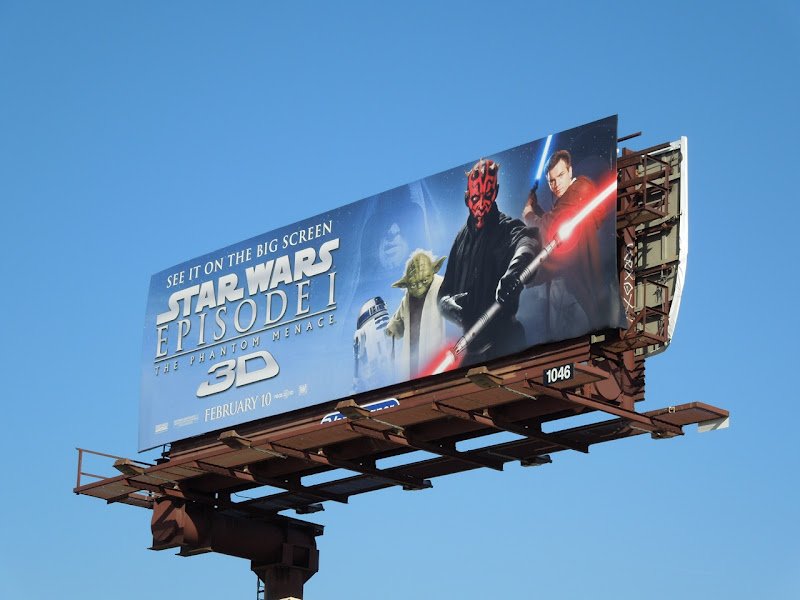
3. Have you had any interest in seeing any of the recent re-released older films, such as Casablanca, Star Wars: The Phantom Menace 3D, or Titanic 3D, whether in 3D or not? Why or why not?

Tom: I cannot stand 3D. Even when done relatively well in films like Hugo and Avatar, where the image isn’t hideously dark and blurry, I don’t believe 3D films replicates how the human eye sees three dimensions. It actually looks far less real than a regular 2D film. That said, I’d certainly consider seeing some classic movies in 2D were they to be re-released. Not a Star Wars prequel, mind you.

Rachel: As a general rule, I am against 3D. So I feel that releasing older films in 3D is nothing more than a pathetic attempt at a cash grab. That being said, I did see Beauty and the Beast in its 3D release, but only because it wasn't showing in 2D and I wanted to take my daughter. And I'm considering Titanic, just so I can see it on the big screen again. My convictions aren't very strong.


Courtney: As much as I enjoyed Titanic and Casablanca, I have no desire to see them on the big screen. I would have considered seeing Star Wars: A New Hope and The Empire Strikes Back had Lucas not made the prequels. The problem with this whole 3D re-launch is that they are basically repacking the same stuff that you have already paid for on VHS, Laserdisc, DVD, and Blu-Ray. It has gotten to the point where I can no longer justify spending more money on films that I have already given so much to.

Jess: I definitely enjoy seeing re-released films in theaters, 3D or not. It's just nice to see some of my favorite movies on the big screen again. Most of them I'm not that interested in seeing in 3D specifically, though I would see something like Titanic in 3D given the grand scope of the film.  

-----------------------
Previously:
Take 1 (3D films, video-on-demand, movies for adults)
Take 2 (Best Picture voting, int'l marketing, Bridesmaids
Take 3 (Netflix, SONY's 3D glasses deal, Oscars)
Take 4 (Brett Ratner, 35mm film, Oscars) 
Take 5 (SOPA, movie criticism, Best Pic voting)